Videos

Take a look inside our workshop. From the initial construction to the delivery of a complete hull.

Jager 40

A 40-foot sailing yacht by Koopmans, built with glass and carbon fiber.

In this video, we take you on a tour of a 40-foot sailing yacht, designed by Koopmans and built using a combination of glass and carbon fiber.

The hull and deck are made of fiberglass, with carbon fiber reinforcements and prepreg components cured in an autoclave. Notable details include the integrated carbon fiber bowsprit, the laminated-in chainplates, the continuous laminate structures, and the carbon fiber mainsheet traveler beam in the cockpit.

By laminating the key components together into one continuous structure, we minimize the risk of leaks and increase the yacht’s durability and lifespan.

The result is a sailing yacht that combines a proven design with modern composite techniques.

Once our work is complete, the yacht will be finished by Loedeman Jachtbouw in Elburg.
71ft sailing yacht

1. The hull

We’re pleased to take you behind the scenes in the first part of our video series about our latest project: a unique 71ft carbon sailing yacht designed by Tripp Design. This innovative vessel will run entirely on fossil-free energy, demonstrating the potential of new technologies in the maritime sector.

With lightweight construction techniques and the latest electric propulsion systems, batteries and solar panels, every aspect is focused on sustainability and efficiency. We are currently focused on building the hull. Once it is complete, KM Yachtbuilders in Makkum will handle the yacht’s fit-out. In this episode, we take you through the construction of the hull, which is built without moulds.

2. The interior structure

We’re pleased to take you through the second part of our video series about the project currently under construction: a unique 71ft carbon sailing yacht designed by Tripp Design. This innovative vessel will operate entirely without fossil fuels, showcasing the possibilities of new technologies in the maritime sector.

With lightweight construction techniques and the latest electric propulsion systems, batteries and solar panels, every aspect is focused on sustainability and efficiency. We are currently concentrating on building the hull. Once the hull is complete, KM Yachtbuilders in Makkum will take care of fitting out the sailing yacht. In the second episode, we share more about the yacht’s interior structure and start building the deck.

3. The deck and the hull

In this third episode, we take a closer look at the construction process of the 71ft carbon sailing yacht, both above and below deck.

A lot has changed on deck since the previous video. It has been laminated with multiple layers of carbon and reinforced. You can also see clever solutions such as integrated line boxes – all designed to create a sleek, extremely rigid deck.

Meanwhile, in the other hall, the hull has been prepared for curing. After the sprint layers have been laminated, the hull is fitted with a vacuum bag to ensure optimal air removal during curing. Watch the video to see how it all works.

4. Hull Handover

In this episode, Paul takes you through the final stage of building the 21-metre-long fully electric carbon sailing yacht.  You’ll get a tour of the hull, during which Paul points out its finest details.

The boat is now in Makkum. There, the hull is being faired and painted. The systems and interior are also being installed. Once the interior is in place, we can bond the deck to the hull. We’ll make a new video then, so be sure to keep following us.

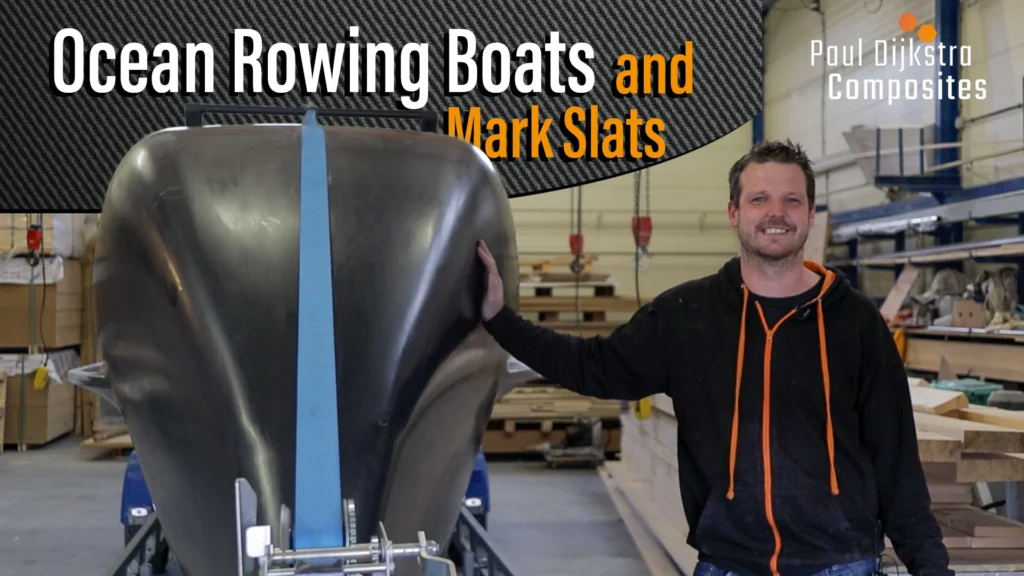
Ocean rowing boats

Eagle 46

1. Building without a traditional mould

In this first episode, you’ll learn about a new construction method developed by PDC. It enabled us to create the very first one-off sailing yacht without a mould. This not only reduces lead time but also generates far less waste. For this more sustainable construction method, we used a relatively new product: the 3D Core KitTM.

For the Eagle 46, a minimal wooden construction mould is used to bond the thermoformed foam Core KitTM in place. The foam Core KitTM then forms the basis for laminating the inner and outer skins. Watch the first episode to find out more.

2. From construction frame to carbon hull

This is the second episode in the build of the first-ever one-off sailing yacht made without a traditional mold. This has enabled the development of a more sustainable production process, resulting in a shorter lead time and, above all, much less material being used. For this, the innovative 3D Core KitTM from Curve Works was used. For this Eagle 46, a wooden construction frame is used to assemble and bond the 3D Corekit. The core kit then forms the basis for laminating the carbon inner and outer skins. The Eagle 46 was built for Leonardo Yachts B.V.

17m carbon motor yacht

1. The design and construction

Paul Dijkstra Composites builds composite hulls and components for boats. For this 17-meter carbon yacht, Paul explains the construction process and what makes the hull special. This vessel is also one of the largest carbon motorboats built in the Netherlands. Episode one provides the basic information about this vessel, designed by Guido de Groot and engineered by Studio Delta. Final fit-out will take place at VMG Enkhuizen.

2. The carbon process

Paul Dijkstra Composites builds composite hulls and components. As we build this 17m carbon motorboat, we explain how the carbon process works. Paul also tells us what makes this vessel so special, while Lance explains the preparations. This boat is one of the largest carbon motorboats built in the Netherlands.

3. A tour of the hull

In this final episode of the series about the 17m carbon motorboat, you’ll get a tour of the hull. The hull has now been moved out of the workshop and is standing on the loading quay, ready to be transported to Enkhuizen. Paul shows you some fine details and explains how the carbon prepreg construction system works.